Skip to content
Motionyard

Dataset specifications

Every dataset is collected to a written specification: task, embodiment, synchronized streams, outcome checks and splits. Filter by what your model needs, then send us a brief.

Find a specification

Specified · pilot scoping Task definition, outcome check and capture schema are written. Accepting buyer briefs for a qualification batch.

Proposed · after single-arm baseline Specification drafted. Collection begins after the single-arm programs establish calibration and QA discipline.

Conditional · engineering validation Offered only after fixture, force and interface validation with the buyer's embodiment.

Separate program · scoped on request Requires dedicated tooling or safety work and is quoted as its own program.

The four task families

Bounded first tasks with written observations, actions, outcome checks and failure coverage.
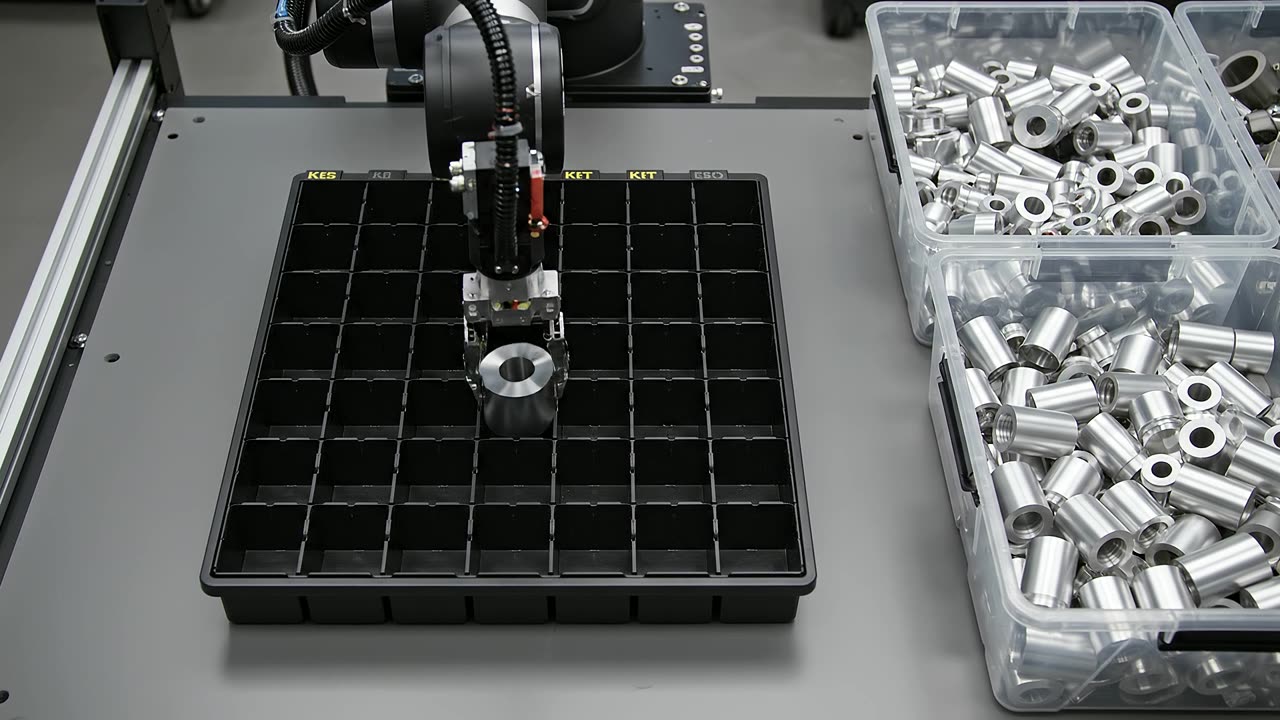
Illustration: kitting into an indexed tray

Rigid-part kitting and sorting

Specified · pilot scoping

Pick specified rigid SKUs from a mixed bin and place each into its indexed pocket in a kit tray.

3–5 owned rigid SKUs from a low-rim bin into an indexed kit tray. Single arm.

Sequence: read kit id, then inspect bin, then select part, then grasp, then orient, then place in pocket, then confirm count, then submit.

Observations

  • Overhead RGB, calibrated to tray frame
  • Wrist RGB
  • Joint positions and gripper aperture
  • Kit ID / barcode read
  • Tray-occupancy state

Actions

  • Leader-arm joint commands at control rate (teleop)
  • Gripper open/close commands
  • Phase markers: grasp, transport, place

How success is checked

  • Barcode/ID plus tray-occupancy check
  • Correct identity, count and pocket for every SKU
  • No missing or extra part; no human intervention within the attempt

Variation and held-out cases

  • SKU shape and color
  • Bin pose and clutter
  • Lighting
  • Held-out objects and layouts reserved for evaluation

Failures and recoveries

  • Wrong SKU selected
  • Failed grasp
  • Dropped item
  • Wrong pocket
  • Safe reset and corrections labeled separately from the nominal attempt

Where it is collected

  • Teleoperation bench
  • Dedicated collection cell
  • Authorized real operation

Safety bounds. Low-rim bins, removable indexed tray, no sharp edges. Parts validated against grasp width and reach.
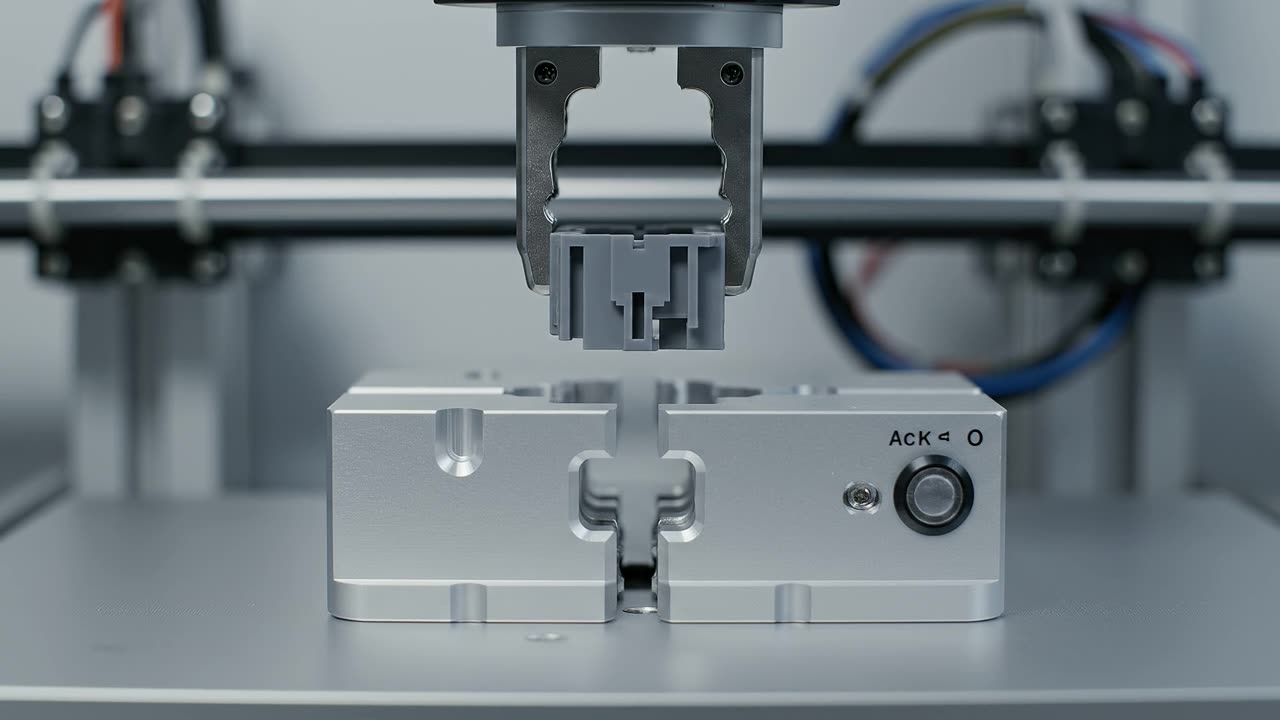
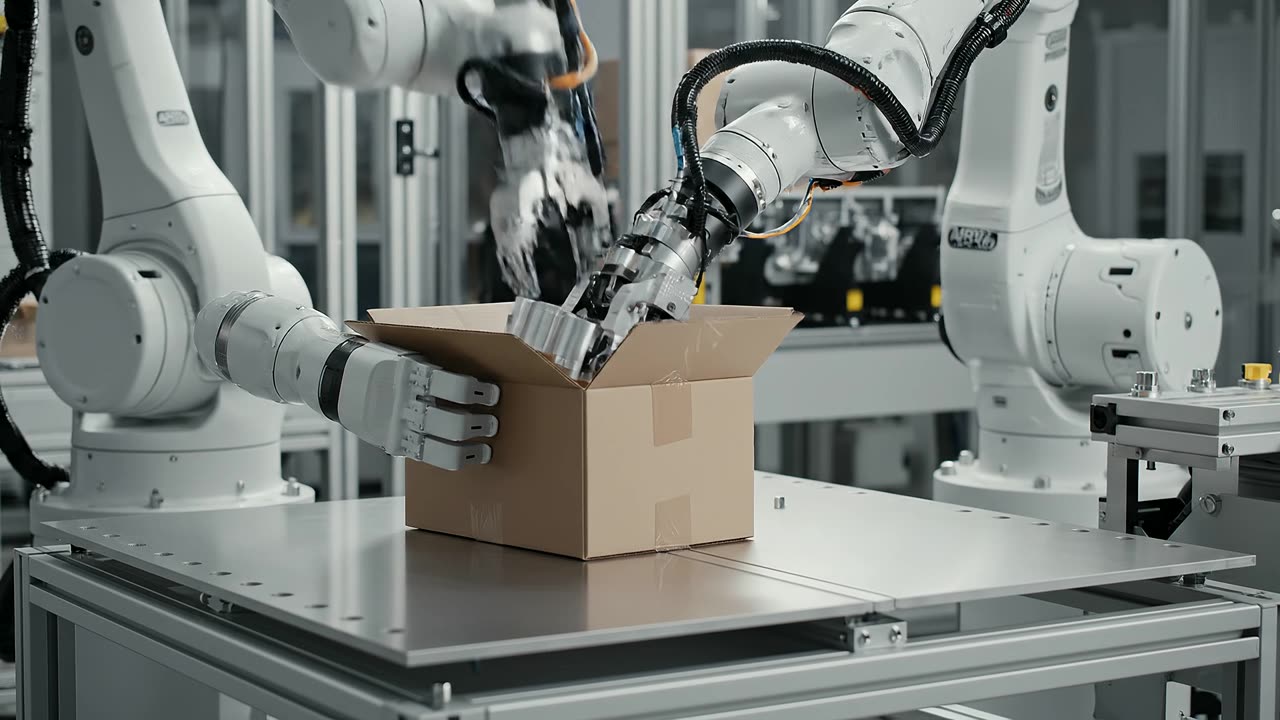
Illustration: seating a part in a keyed fixture

Fixture loading, inspection and unloading

Specified · pilot scoping

Load a part into a keyed fixture, trigger an inspection signal, read pass/fail and route it to the correct tray.

Owned housings or blank boards into an inert, keyed nest with a low-voltage inspection signal. Single arm.

Sequence: identify item, then grasp, then align to keyed nest, then seat without forcing, then trigger inspection, then read pass/fail, then route to accept / rework.

Observations

  • Overhead and wrist RGB
  • Joint state and gripper aperture
  • Seat-switch state
  • Inspection signal (pass/fail)
  • Fixture and item IDs

Actions

  • Leader-arm joint commands (teleop)
  • Gripper commands
  • Inspection trigger event
  • Disposition decision

How success is checked

  • Seat sensor confirms orientation and full seating
  • Correct disposition to accept or rework tray
  • Inspection rule kept independent of the model under test

Variation and held-out cases

  • Item rotation
  • Fixture offset
  • Visible distractors
  • Pass/fail mix

Failures and recoveries

  • Misalignment
  • Partial seating
  • Misclassified inspection
  • Withdraw and realign within a bounded retry policy

Where it is collected

  • Teleoperation bench
  • Dedicated collection cell
  • Authorized real operation

Safety bounds. Inert fixture with generous lead-in. No moving machine doors, no energized product, mechanically bounded forces.

Illustration: two-arm carton packout

Dual-arm packaging and packout

Proposed · after single-arm baseline

One arm stabilizes a carton or tray while the other inserts specified items, then both align and close the lid.

2–3 light owned parts into a small pre-creased carton or reusable lidded tray within both arms' reach. Two arms.

Sequence: stabilize packaging, then open flap, then place items, then settle insert, then align lid, then close, then verify contents and closure.

Observations

  • Overhead RGB plus one wrist camera per arm
  • Joint state for both arms
  • Both gripper apertures
  • Contents check captured before occlusion
  • Closure state

Actions

  • Bimanual leader-arm commands (teleop)
  • Support / manipulate role per arm
  • Hand-off and regrasp events

How success is checked

  • Correct contents and orientation, checked before the lid occludes them
  • Lid fully closed; no damage or extra item
  • Any fixture assistance disclosed in the task definition

Variation and held-out cases

  • Box/tray dimensions within validated range
  • Object positions
  • Flap angles
  • Reserved packaging variants for evaluation

Failures and recoveries

  • Collapsed flap
  • Misaligned lid
  • Shifted insert
  • Missing item
  • Support and regrasp strategy annotated

Where it is collected

  • Teleoperation bench
  • Dedicated collection cell
  • Authorized real operation

Safety bounds. Reusable indexed base and packaging jig. No blades, staplers, hot glue or blade-based tape.

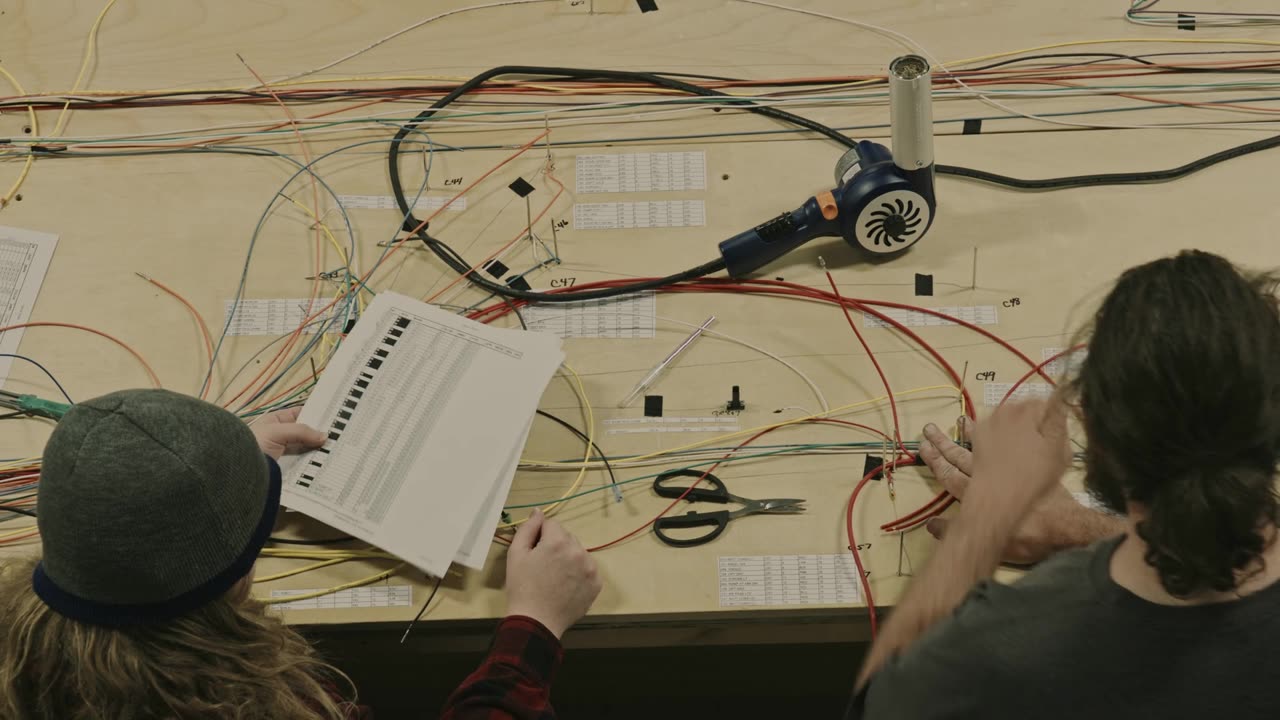
Harness routing on a formboard

Cable harness routing and assembly

Proposed · after single-arm baseline

Manage slack with one arm while the other routes a flexible harness through ordered guides and seats it into clips.

A short, unenergized low-voltage harness routed through 3–5 open, rounded guides on a pegboard. Two arms.

Sequence: identify ends, then manage slack, then route segment, then exchange support, then seat in clips, then check topology, then present ends.

Observations

  • Overhead RGB plus wrist cameras
  • Joint state for both arms
  • Gripper apertures
  • Guide/clip occupancy
  • Endpoint positions

Actions

  • Bimanual leader-arm commands (teleop)
  • Slack-management vs routing role per arm
  • Support exchange events

How success is checked

  • Correct guide order and endpoint location
  • No prohibited crossing or kink; cable retained in clips
  • Continuity checked only where applicable

Variation and held-out cases

  • Cable stiffness, length and color
  • Pegboard layout
  • Initial tangles
  • Endpoint orientation within safe bounds

Failures and recoveries

  • Lost slack
  • Missed clip
  • Crossed route
  • Slip
  • Safe regrasp and reroute — never deliberate damage

Where it is collected

  • Teleoperation bench
  • Dedicated collection cell
  • Authorized real operation

Safety bounds. Open pegboard with rounded guides. No crimping, stripping, soldering or energized harness. Not a claim of full industrial harness complexity.

Four kinds of data, never mixed up

Only teleoperation trajectories carry robot actions, and only for the embodiment they were recorded on.

Authentic workplace footage

Real operators doing real work, recorded with explicit site and worker permission.

Captures: egocentric and fixed-view video; timestamps; task and step segmentation; site context metadata.

Does not provide: robot action labels; a calibrated embodiment; controlled variation or held-out splits.

Dedicated staged collection

Paid operators perform a written SOP in an isolated cell with owned parts and controlled variation.

Captures: calibrated multi-view video; object and fixture ids; independent outcome check; reset timing.

Does not provide: robot action labels; production-line authenticity.

Robot teleoperation trajectories

Leader–follower demonstrations on a specified embodiment, synchronized and calibrated.

Captures: synchronized observations; commanded actions and measured state; calibration and firmware versions; intervention and outcome flags.

Does not provide: automatic transfer to other embodiments; production-line authenticity.

Enriched engineering / SOP data

The structure around the task: SOPs, fixture CAD, tolerances, inspection rules and failure taxonomies.

Captures: versioned sop and step graph; object and fixture models; success criteria; defect taxonomy.

Does not provide: demonstrations on its own.

Further tasks, scoped on request

Small-cloth folding. Buyer-led only. Staged clean cloth and genuine laundry footage are different products. Two arms.

Proposed · after single-arm baseline

Connector mating and latch verification. Requires force/interface validation. Latch and continuity confirmed mechanically, never from video alone. Single arm.

Conditional · engineering validation

Torque-controlled screw fastening. Needs a validated driver, torque/angle logging and guarding — a tooling project, not a gripper task. Single arm.

Separate program · scoped on request

Zipper and pouch manipulation. Buyer-specific dexterity. Parallel grippers are not presented as humanoid-hand equivalent. Two arms.

Separate program · scoped on request